Key findings
- The handover is managed by one responsible person, usually the salesperson. They confirm the date only once the paperwork and technical preparation are complete and finance has released the car.
- Allow roughly 45–60 minutes for the handover appointment itself. The sequence: joint walkaround, controls and driver assistance systems, the app, maintenance and warranty, and signing the report only at the end.
- The vehicle handover report records the VIN, odometer reading, fuel or charge level, damage with photos, number of keys, documents and accessories. It also contains open items with a deadline and the signatures of both parties.
- A new car handover checks conformity with the ordered specification and any transport damage. A used car handover separates known wear from new damage, and the previous user's accounts are disconnected.
- Follow-up contact is planned at the handover. Every open request has a person responsible and a deadline.
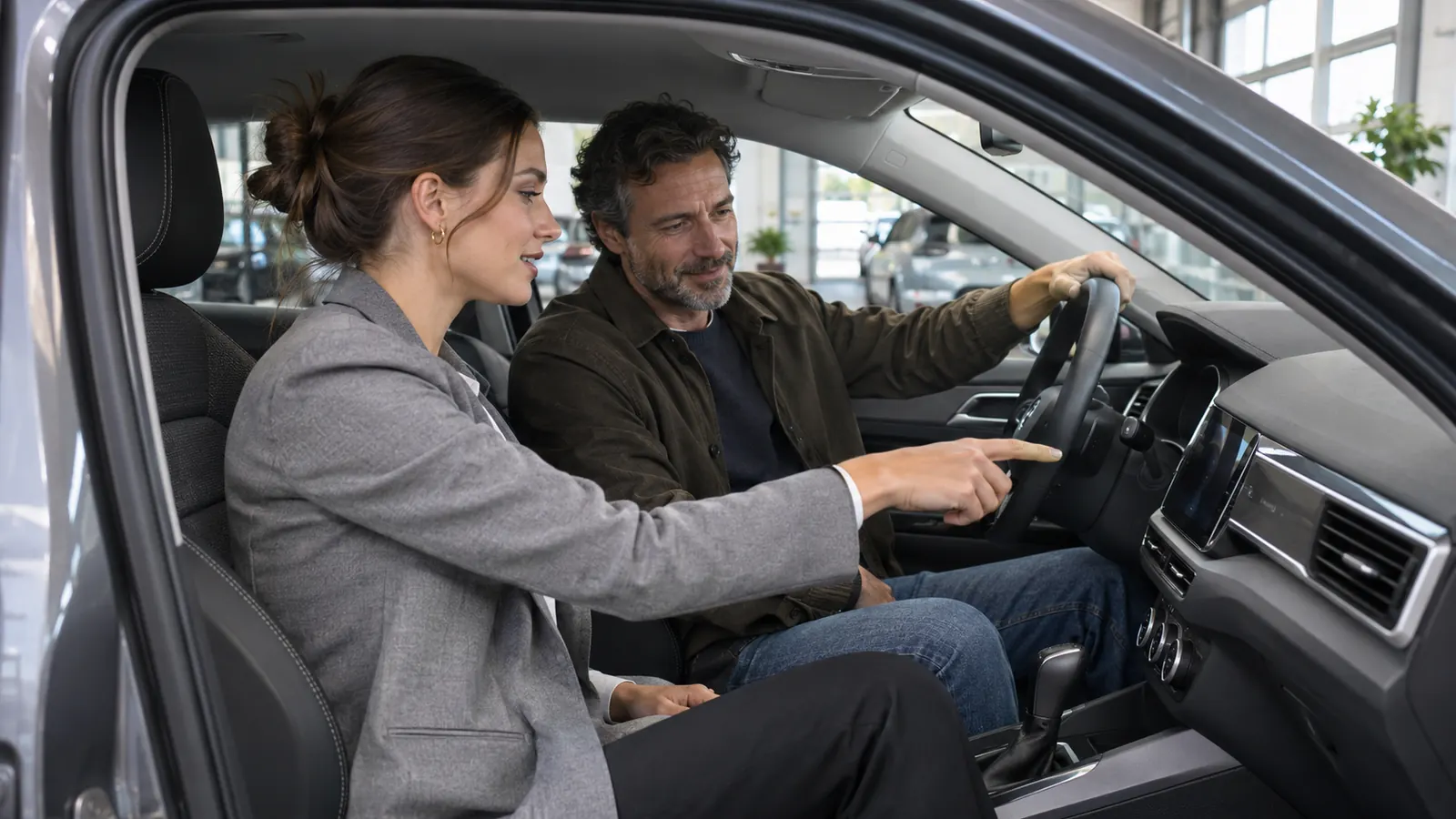
Handing a car over to the customer is the last step in the sale and, at the same time, the customer's first experience of the car. At the handover, the customer compares the promised condition with what they are actually taking delivery of. At that moment, the dealership must have the car's physical condition, the documents and the sales records all in line. Without a consistent process, the salesperson ends up searching for the second key in front of the customer, finishing incomplete preparation or checking whether the car has been paid for.
How to plan the vehicle handover and divide responsibilities
One person, usually the salesperson, is responsible for the entire handover. They coordinate the other departments and confirm that the car is ready. However, the workshop confirms the technical condition, and a member of the finance team confirms that the payment terms have been met.
| Role | Responsibility before handover | Entry in the records |
|---|---|---|
| Salesperson | Conformity with the order, scope of the handover, communication with the customer | Date, person handing over, promised equipment and services |
| Workshop or technical preparation | Completed work, technical check, rectification of faults preventing release | Result of the check and closed preparation items |
| Administration | Contract and handover documents, registration and related tasks | What is done, what remains and who will handle it |
| Finance | Fulfilment of the agreed payment terms | Release of the car for handover |
| Sales manager | Exceptions and decisions to postpone | Approved procedure and new date |
The salesperson's diary is not enough. The date must follow on from completion of work in the workshop, delivery of accessories and completed paperwork. If any of these changes, it must be clear who will adjust the plan and inform the customer.
For used cars, the Used Car Sales module in Omnetic manages the sale from buying in through reconditioning and advertising to handover and accounting. The status of both preparation and the deal is thus in a single process. Data does not have to be transferred between a preparation spreadsheet and the sales records.
Allow roughly 45–60 minutes for the handover appointment itself. This covers the joint walkaround, explaining the controls, setting up services and signing documents. A handover with the paperwork completed in advance takes less time. A customer switching to a different powertrain or taking delivery of a car with extensive driver assistance systems needs more time.
What must be ready before the customer arrives
Divide preparation into documents, the car and the conditions for its release. Only a car for which all three areas are closed gets the status "ready".
Pre-handover checklist
- Sales documents: the customer's details, VIN, equipment and accessories match the order and the contract.
- Payment and financing: the records show that the conditions for releasing the car have been met.
- Registration and insurance: it is clear which tasks have been completed and who will take care of the remaining steps.
- Technical preparation: agreed repairs, servicing and fitting work are complete, and faults preventing safe use have been rectified.
- Keys and accessories: the number of keys, cables, wheels and other accessories sold match what was agreed.
- Documentation: service and warranty documents, the owner's manual and documents for additional services are ready.
- Fuel or charge: the level matches what was agreed and is sufficient for the customer's planned journey.
- Cleanliness and digital settings: the car is washed and tidy. For a used car, personal data has been deleted and the previous user's accounts disconnected.
Deal with registration, insurance and the right to use the car on the road according to the rules of the country of handover. The company procedure across the whole network determines who is responsible for each task and what confirmation they must provide. National deadlines for registering a change of ownership vary and are often short, so have them written into the procedure for every country where you hand over cars. For a used car handover, the plan should therefore also cover who submits the change of ownership and when.
For an electric car, set a company minimum charge level and tell the customer in advance. Germany's voluntary BBM standard is one example. It requires at least 50% of the remaining battery capacity at handover. If you agree otherwise with the customer, or their planned journey requires it, the agreed level applies.
How to carry out the final check of the car
The final check comes only after preparation has been completed. Photos from when the car was taken in do not show its condition after repair, valeting or a transfer between branches.
The preparation technician compares the VIN with the documents and records the odometer reading. They go over the bodywork, interior, equipment and the functions covered by the preparation. They pass the result to the salesperson before the customer arrives. If they find new damage or unfinished work, the sales manager decides whether the handover goes ahead or is postponed.
In the CarAudit app, the technician goes through the car using a configured checklist. They mark damage on a body diagram and attach photos. The report is saved to the vehicle record in DMS Core, and the findings generate preparation tasks.
New car handover and used car handover: how they differ
| Area | New car handover | Used car handover |
|---|---|---|
| Conformity with the deal | Ordered specification, equipment and fitted accessories | Agreed equipment, accessories and the condition described at the sale |
| Technical preparation | Pre-delivery inspection according to the manufacturer's procedure | Agreed repairs and servicing |
| Condition of surfaces | Any damage from transport or handling | Distinguishing known wear from new damage |
| Service information | Service schedule and warranty terms | Available service history and date of the next service |
| Digital environment | Initial set-up of the account and connected services | Disconnecting the previous user and setting up the new one |
| Report | Condition at handover | Condition at handover, including recorded wear and known defects |
With a used car, do not leave the conversation about known damage until the signing. During the joint walkaround, the customer should see which signs of use were part of the deal. They should also see that the condition has not changed since the last inspection.
What to show the customer at the handover itself
Run the appointment from the joint walkaround through using the car to the documents. A signature at the start would come before checking what the customer is taking delivery of.
Joint walkaround and items handed over
The salesperson goes over the exterior, interior and accessories sold with the customer. Keys, documents and other items being handed over must be laid out ready by the car. It is not enough for the preparation checklist to mark them as done. Any discrepancy is recorded immediately. For a missing item, the method of delivery, the person responsible and the deadline are recorded too.
Controls and driver assistance systems
Tailor the explanation to how the new car differs from the one the customer is used to. Spend most time on everyday use and safety features:
- starting, gear selection and the parking brake;
- lights, wipers and basic display settings;
- driver assistance systems, their limitations and when the driver must intervene;
- refuelling or charging, including opening the fuel flap or charging port cover;
- unlocking and starting the car when the key battery is flat.
Hyundai's Austrian handover checklist includes both a theoretical and a practical introduction to the driver assistance systems. The same principle fits any procedure: back up the verbal description with a demonstration on the car being handed over.
The app and connected services
The customer should know which functions are active, which need their account and which apply only for a limited period or have separate terms. A paired phone does not yet mean the services are set up. Explaining the vehicle app is one of the mandatory points in Germany's BBM standard too.
The customer enters their login details themselves. If activation fails, an open task is created with a person responsible and a deadline. A verbal promise from the salesperson is not enough.
Maintenance and warranty
When driving away, the customer should know when and on what basis the next service is scheduled, whom to contact if there is a fault and which documents they have received. Hyundai's Austrian handover checklist therefore also includes an explanation of the service intervals.
When buying a new car from a business, a consumer in the EU has at least two years of legal protection against defects from delivery. Explain the manufacturer's voluntary warranty separately, including its terms. For a used car, the information must match the specific deal and the law of the country concerned. Do not carry over the terms for a new car.
What the vehicle handover report should contain
The vehicle handover report records the car's condition at the moment of handover. It does not replace the purchase agreement or the record of technical preparation.
| Part of the report | What to record |
|---|---|
| Identification | Customer, the company and staff member handing over, VIN, registration number if allocated |
| Time of handover | Date, time and place |
| Condition of the car | Odometer reading, fuel or charge level, description of condition and damage |
| Items handed over | Number of keys, documents, accessories and other items as agreed |
| Introduction to the car | Controls, driver assistance systems, maintenance and connected services covered |
| Open items | Exact description, how it will be resolved, person responsible and deadline |
| Photos | Overall views, odometer reading and close-ups of recorded damage |
| Confirmation | Signature of the person handing over and of the customer or the person taking delivery on their behalf |
Photos must belong to the specific handover. A photo of the customer with the car does not replace documentation of the condition. Hyundai's Austrian handover checklist includes a handover photo as well as photo documentation. It also covers the complete set of keys, the service and warranty documents and the signatures of the salesperson and the customer.
After signing, the customer receives a copy of the report with its attachments. The actual handover date is entered in the records, not the originally planned date.
What follow-up contact should look like
Plan the follow-up contact at the handover. In the first few days, the salesperson asks about using the car, whether the services are working and progress on open items. Ask for a review only after any reported problem has been resolved.
A question about the controls is handled by the salesperson, a technical problem is taken over by the workshop, and a missing document by administration. For every request, it must be clear who will reply to the customer and what the next step is.
Omnetic CRM manages the next steps, with a person responsible and a deadline, directly on the customer record. Aftercare therefore does not stay only in the salesperson's diary or emails.
Watch out at the handover
The biggest risk is a gap between what the business has marked as done and what the customer actually receives.
| Situation | Correct procedure |
|---|---|
| The second key has not yet arrived | Inform the customer in advance and agree the method and date of delivery in writing |
| New damage appears after valeting | Document it and agree a remedy before the report is signed |
| The promised charging cable is missing | Arrange delivery and agree how the customer will charge in the meantime |
| A warning light is on in the instrument cluster | Pass the matter to the workshop. Rectify any fault preventing safe use before release |
| The app cannot be activated | Create a task with a person responsible and a date for the next contact |
Do not use blank reports signed in advance or vague entries such as "accessories to follow". Such an entry does not tell you what is missing, who will arrange it and when the customer will get it.
Omnetic connects preparation, handover and aftercare
When each department works in a different system, the salesperson has to piece together information from the workshop job, the vehicle records and communication with the customer before the handover. In Omnetic, all modules work with a single shared record of the vehicle, customer, jobs and money in DMS Core. Data is not re-keyed between them.
Three tools follow on from the handover:
- Digital Deal records the signed offer in the sales opportunity in CRM. The completed deal then links to invoicing, vehicle preparation and handover without re-entering data.
- CarAudit guides staff through a checklist right next to the car, online or offline. It saves the report with photos and findings to the vehicle record.
- Omnetic CRM manages the follow-up steps, with a person responsible and a deadline, for the same customer and car.
The car's condition recorded at handover thus stays on the same record as the aftercare. Photos do not stay on a phone, and outstanding items do not stay in the salesperson's notes.
Book an Omnetic demo focused on linking preparation, inspection and handover in your business.
Related articles
- Used car reconditioning: in-house or outsourced?
- Selling a car on consignment or buying it in? Differences in liability, contracts and records
- Vehicle check-in at the workshop: active reception, walkaround with the customer and condition report
FAQ
Can someone other than the buyer collect the car?
Yes, provided the conditions for acting on the buyer's behalf have been settled in advance according to the rules of the country concerned. Administration determines the necessary documents before the handover date. The report must make it clear who took delivery of the car and on whose behalf they acted.
How should a handover away from the dealership be handled?
The same checklist and report apply. The person handing over needs access to the documents, the ability to take photos and a contact for the colleague who decides on exceptions. The location must allow the car to be inspected safely and the controls to be demonstrated.
What should you do if the customer postpones the handover?
Keep the car in the status "awaiting handover" and agree a new date. Repeat the final check before the new appointment. If the car has been moved or driven in the meantime, carry out the full check.
Can Omnetic be introduced just for vehicle inspections and handovers?
Yes. Omnetic can be introduced gradually: start with one module, such as CarAudit, and add others later. Existing systems, such as accounting software, can be connected via the open platform.
Sources
- https://www.autohaus.de/downloadfile/3296791/BBM_H%C3%A4ndlerstandard_V2.pdf
- https://coop.hyundai.at/media/23080/hyun_checkliste-fahrzeuguebergabe.pdf
- https://europa.eu/youreurope/citizens/consumers/shopping/guarantees/index_en.htm
- https://www.omnetic.com/used-car-sales
- https://www.omnetic.com/dms-core
- https://www.omnetic.com/caraudit
- https://www.omnetic.com/crm
- https://www.omnetic.com/digital-deal
- https://www.omnetic.com/faq