Key findings
- Equipment that a listing doesn't mention loses part of its value at the point of sale. Buyers have no reason to pay extra for something they don't know about.
- A missing seat count can drop a seven-seat SUV from the search results of exactly the families it would suit best.
- In our model example, improving the listing costs €90. Even with interest, insurance and paid listings for another two weeks, the total is around €170 – far less than a €1,000 discount.
- Specific features sell better than a vague “well equipped”: seven seats, ventilated seats or a tow bar belong in the text and in the photos.
- Omnetic helps prepare the description from stored vehicle data and monitors photo quality, while Stock Report flags incomplete listings before anyone starts talking about a discount.
A used car dealer pays for seven seats, all-wheel drive or upgraded seats when it buys the car. That investment only pays off at the point of sale if the buyer values it – and to do that, they first have to know about it. A missing detail or a poorly chosen photo can turn a well-equipped car into one of many seemingly overpriced offers online. The salesperson then reaches for a discount, even though the problem lies in the listing. Using a model example, we show where used car listings most often lose prospects and how a better listing can earn a dealer more than €800 extra on a single sale.
The stock buyer paid for the equipment, but the customer can't see it
On the forecourt stands a family SUV with seven seats, ventilated front seats and a tow bar. The stock buyer chose it deliberately: families with three children look for more seats, caravan owners for a tow bar, and people who spend a lot of time behind the wheel appreciate more comfortable seats. That is why they paid more for it than for a similar car in base specification.
But the listing doesn't mention the number of seats. The third row was folded down during the photo shoot, and the picture of the boot doesn't show that two more seats are hidden under the floor. The tow bar didn't fit in the frame. The text opens with “well equipped” and continues with a long list of abbreviations in which the seat ventilation easily gets lost.
The buyer mainly sees the price. Next to a cheaper five-seat SUV, the offer looks expensive, and they have no reason to investigate whether it hides something the seller forgot to mention. The same portal has other cars, and for some of them everything important is visible straight away.
When the phone has been silent for several weeks, the dealership starts talking about a discount. The stock buyer may feel they bought badly, while the salesperson concludes that customers don't want that kind of equipment. Yet the real problem may be much simpler: the listing hasn't yet reached the people who would be happy to pay for that equipment.
Omnetic helps close this gap between the car and how it is presented. In the Used Car Sales module, the salesperson has the equipment details, photos and technical information on the same vehicle record and can prepare the description from them without retyping anything. The features that made the car more expensive to buy then also become selling points.
Some prospects never even reach the listing
A family that needs seven seats doesn't usually call about every SUV. On the portal, they enter the number of seats and browse only matching offers. If a missing detail drops the car from that selection, the customer never sees the photos or the description – and the salesperson has lost the chance to explain the price before any contact has even been made.
Gearbox, drivetrain and body type play a similar role. The portal uses them to decide which cars to show the customer. An accurate description in the text is useful, but it can't replace the field the portal filters listings by – that field has to be filled in.
The next decision is made in the search results. The buyer sees the main photo, the price and a few words about the car. A photo in which the car blends into its surroundings won't help them recognise the specific version or judge its condition. Better equipment alone won't make them open the listing.
Stock Report flags missing data and photos as well as inconsistencies in how a car is classified. For our SUV, checking the listing reveals a problem a discount wouldn't solve: a lower price tag won't add the missing seat count. The car would be cheaper, yet it would still miss the families looking for seven seats.
€90 for a better listing instead of a €1,000 discount
The model dealership is selling our SUV for €21,000. Interest is weak, and the only buyer is offering €20,000 for immediate collection. The sales manager is already considering accepting the offer. Before agreeing, they look at the car in Stock Report. A warning about incomplete data leads them to the missing seat count, and when they go through the photos they find that the third row isn't visible either.
They decide to fix the listing first. An external contractor takes new photos and, together with the salesperson, updates the listing in Omnetic: they add the number of seats, photos of the third row and a description based on the stored equipment data. The dealership pays €90 for the photos and the update. It keeps the price, and two weeks later the car is bought for the full €21,000 by a family that was looking for exactly this kind of seven-seat SUV.
The dealership thus took in €1,000 more. But part of the difference went on improving the listing and waiting. The car was bought with a €17,000 loan at 6% a year, and the extra two weeks cost roughly €40 in interest. Vehicle insurance and paid listings over the same period add roughly another €40.
| What the dealership paid because of the later sale | Amount |
|---|---|
| New photos and listing update | €90 |
| Another 14 days of interest on a €17,000 loan at 6% a year | €40 |
| Vehicle insurance and paid listings for another 14 days | €40 |
| Total | €170 |
The amounts in the table are rounded to the nearest ten euros. After paying for the listing update and the extra two weeks, the dealership was left with more than €800.
The family paid the original price because they had finally found a car that met their requirements. The listing had been missing the very information they were using to choose – which is why completing it made commercial sense. Omnetic helps find and fix such gaps before they become a reason to cut the price.
A specific feature commands a premium more easily than “well equipped”
For someone who needs to fit three children in the car and occasionally give the grandparents a lift, seven seats is clear information. “Well equipped” tells them nothing: they don't know what is included and have no way of judging how the car differs from a cheaper one.
The same goes for ventilated seats or a tow bar. They should be named in the listing and have their place in the photos. The buyer can then easily tell whether this is equipment they will use. A caravan owner will value a factory-fitted tow bar more than yet another decorative body trim, while a family will be interested mainly in the seats and luggage space.
When the description is written, Omnetic can draw on data for the specific vehicle. The salesperson chooses which information to use and gets a draft text that covers, for example, equipment, engine, origin or condition. They don't have to retype each car's strengths into a blank document. VIN decoding also gives them further information for verifying the equipment.
The result is a listing in which the buyer quickly finds answers to their questions. For our SUV, the seven seats, seat ventilation and tow bar are stated directly. The salesperson adds what they know from inspecting the car, and the description matches the actual car on the forecourt.
Text like this also helps in price negotiations. When the customer points to a cheaper SUV, the salesperson can explain the specific differences, and the conversation doesn't have to turn straight away to how much of a discount they are willing to give. The buyer has a reason in front of them why one offer costs more and why it may suit them better.
Photos can show what the customer is paying for
For a seven-seater, a photo with the third row raised carries different weight from yet another almost identical shot of the front bumper. It shows a family the seating layout, access to the rear and the space left for luggage. They can imagine how they will use the car – and that is exactly what a generic description didn't give them.
A good set of photos presents the specific car: its key equipment, interior and condition. The person who then comes for a viewing already knows why the car caught their interest. The salesperson doesn't have to start by explaining basic details, and the customer doesn't discover on site that they had understood the listing completely differently.
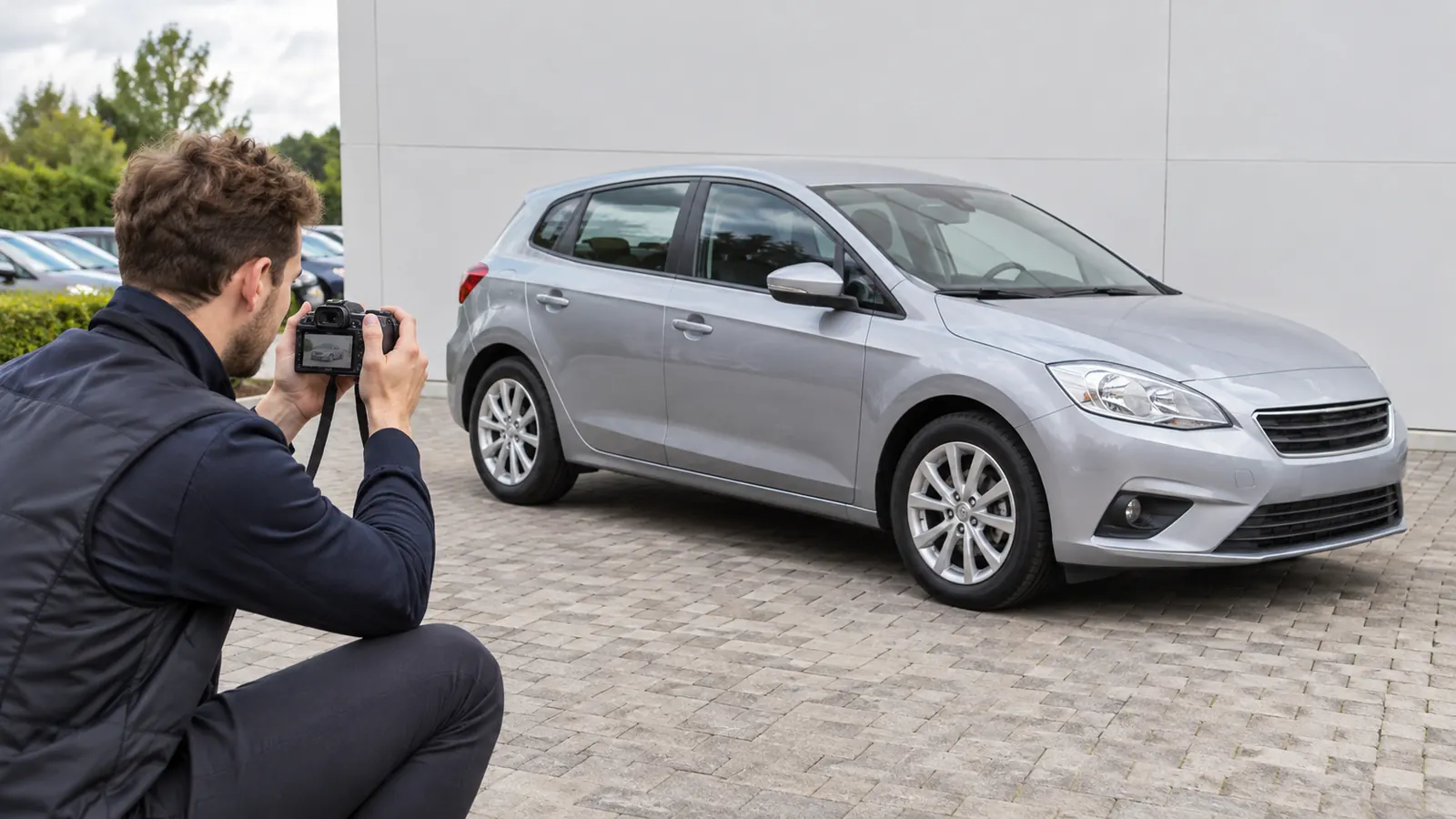
Omnetic guides the salesperson through photographing the car and stores the images in albums. PhotoChecker helps detect shortcomings in the photos. For our SUV, the salesperson adds exactly what the existing images didn't show: the third row and other key equipment.
The Magic Publishing feature in Omnetic BRAIN™ makes photo editing easier, for example unifying the background or adding a watermark. With a larger number of cars, it saves repetitive work and gives the dealership's listings a consistent look. The car is clearly visible in the picture, and the customer isn't distracted by random surroundings.
Honestly photographed normal wear and tear also has commercial value. When the buyer knows about a scratch in advance, they won't be surprised at the viewing. The salesperson is then negotiating over the car the customer expected and doesn't have to explain the difference between the photos and reality.
With dozens of cars, weak listings easily get lost
A dealership owner usually knows the few cars that have been on the forecourt the longest. What is less clear is what their listings are missing. Meetings focus on the number of calls and the price, but nobody necessarily has the listing in front of them as the customer sees it. An incomplete listing can thus survive several rounds of price cuts.
Stock Report combines checks on price, time in stock and listing quality. It flags problems and helps decide which cars to deal with first. The sales manager can thus tell two different situations apart: either the car is expensive compared with the market, or its listing doesn't explain what the customer gets for the higher price.
For our SUV, a simple price comparison with cheaper five-seat versions could lead to another discount. But information on equipment and listing quality makes it possible to judge the price in context. The salesperson has a reason to add the number of seats and photos of the third row, because that is precisely what sets the car apart from cheaper alternatives.
The benefit is most visible in a business with several salespeople or branches. The manager doesn't have to rely on someone happening to spot every mistake. A continuous overview helps them catch recurring shortcomings and put back into listings the equipment the business already paid for when it bought the car.
What the stock buyer knows, the customer needs to know too
When taking delivery of a car, the stock buyer knows why they bought it. The salesperson preparing the listing a few days later wasn't there, and the photographer may not know every item of equipment. When information is scattered across messages and notes, it's easy for an important feature to be missing from the listing.
In Omnetic, everyone who works with the car shares the same data, equipment list and photos. The description can be compiled from information already stored with the car, and Magic Publishing helps prepare the listing and publish it on the sales channels in use. There are fewer points where an important detail can get lost through yet another round of manual retyping.
For a smaller dealership, this saves evenings spent entering the same car over and over; for a larger business, it brings consistent listings across the team. When a customer contacts a different salesperson, that colleague has the same information and doesn't have to find out again what makes the car interesting.
A well-prepared listing also saves extra work. The salesperson doesn't have to send each prospect a separate photo of the boot or explain the number of seats – the listing has already answered the basic questions. The phone call can then be about a viewing date, a trade-in or whether the car suits the customer's particular needs.
Omnetic takes the car's equipment all the way into the listing
Incomplete listings usually arise where buying in, preparation, photography and listing run in separate tools. In Omnetic, everyone works on a single vehicle record containing the equipment data and photos.
- Used Car Sales manages the sale of a used car from buying in through preparation and listing to handover and accounting.
- Omnetic BRAIN™ helps with the description based on stored vehicle data, with photo editing (Magic Publishing) and with checking photo quality (PhotoChecker). It suggests and checks; the salesperson decides on the result.
- Stock Report goes through the stock every night and, for cars that need a decision, suggests a step along with the reason – such as fixing the listing instead of repricing.
Book an Omnetic demo and see how it connects vehicle data, photos and publishing the listing. With your next car, the first step can then be a better presentation, not another discount.
Related articles
- Study: When does it pay to cut a used car's price instead of waiting longer?
- Used car reconditioning: in-house or outsourced?
- Study: How much can a used car dealer save by automating admin?
FAQ
Why is nobody responding to a listing even though the car is well priced?
The buyer may never find out about its strengths. A missing specification can drop the car from search results, weak photos won't make the customer open the listing, and a generic description won't explain the difference from cheaper cars. Stock Report helps assess listing shortcomings together with price and time in stock.
How can equipment left out of the listing reduce a dealer's profit?
The business paid for the better equipment when it bought the car, but the customer doesn't see it when comparing prices. The car therefore seems overpriced to them, and the salesperson is more likely to agree to a discount. Yet for the seven-seat SUV in our example, it was enough to add the number of seats and photos of the third row.
How much does fixing a listing cost, and how much does waiting longer cost?
In our model, new photos and updating the listing cost €90. Two extra weeks of waiting mean roughly €40 in interest and €40 for insurance and paid listings. That comes to about €170 in total, while the difference in sale price is €1,000.
What does Magic Publishing make easier for the salesperson?
Preparing and publishing listings, including work with text and photos. The salesperson can use the data stored for the specific vehicle, give the photos a consistent look and prepare the listing for the sales channels in use. They don't have to describe the same car from scratch in every place.
What is PhotoChecker for if the car already has photos?
It helps detect shortcomings in their quality. The number of photos alone doesn't say whether the listing presents the car well. The salesperson can reshoot problematic shots and complete the set so that the customer sees the interior, the condition and the equipment that should make the car interesting to them.
How does Stock Report help prevent unnecessary price cuts?
In addition to price and time in stock, it also checks listing quality. It flags missing data or photos and helps decide which cars to deal with first. The manager can thus spot a listing that doesn't yet explain the car's value and complete it before reaching for a discount.